
When Mold Is Invisible, Can Black Light Help To Find It?
Are you wondering how to spot mold before it spreads in your NJ home or property? A black light, or a UV flashlight, is certainly a method that NJ homeowners or mold inspectors can use.
How Does Black Light Work?
Certain types of mold, like Aspergillus and Penicillium, contain compounds that fluoresce under UV-A light. When black light shines on an area, it is often glowing green, yellow, or white in the dark, and so it can make some things visible. For instance, some types of mold that were otherwise not visible.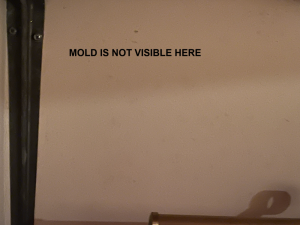
Best to turn off the lights in the room, sweep the (365nm) UV black light slowly over an area or up walls, on ceilings, in bathrooms, basements, and around windows or pipes. Look for any suspicious glow or visible stain.
If anything appears, it could indicate that there is mold growth and/or a potential moisture issue in your NJ property.
Is There A Recommended Black Light Solution?
Look for and/or use a quality 365nm UV flashlight! There are also cheaper 395nm+ flashlights, but these are often just too weak for the purpose of detecting or seeing mold.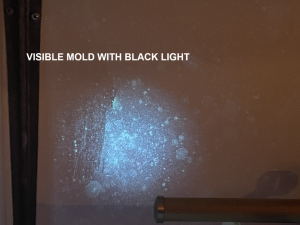 Once armed with the proper ‘black light’, combine it with your nose (for any musty smells), and, for even better results, a moisture meter to look around.
Not all mold will glow, but many kinds do. And black light can’t detect mold hidden behind a wall, but it’s a start in an early NJ mold inspection effort.
Contact Mold Testing NJ – NY!
For a more thorough, experienced, and reliable mold inspection, contact ‘Mold Testing NJ – NY.’ We are certified, Bergen County, NJ-based, and we serve all of northern NJ, central NJ, and the local areas of NY.
While we have many tools, a quality 365nm UV flashlight is certainly one of them! Contact Us Today With Any Questions About Mold Here:


